A yard the dog cannot leave
Physical fencing sized to your dog — height for the jumpers, a closed base for the diggers, spacing for the small ones, and gates that latch themselves. Across northern New Jersey.
Fencing a yard and containing a dog are two different jobs
A fence that looks perfectly good around a garden can be useless around a dog, and the reason is almost never height. It is the four-inch gap along the bottom where the ground falls away. It is the horizontal rail on the inside face that a determined climber uses as a step. It is the picket spacing that a puppy walks straight through. It is the gate somebody did not push all the way closed.
So we start with the animal rather than the yard. Size, breed, and — the question that decides the whole specification — what the dog actually does: jump, dig, push through, or simply wander when the gate is open. A beagle and a husky need two different fences, and quoting either one without asking is guesswork.
One thing to be clear about: this page is about physical fences. We do not install invisible or electric containment, which is a buried wire and a collar rather than a barrier — and which does nothing to keep other animals or people out of your yard. If you already have invisible-fence wire in the ground, tell us before we dig. It sits shallow, and the 811 utility markout does not cover private lines like it.
The four places dog containment actually fails
Height for the climbers, the base for the diggers, spacing for the small ones, and the gate — which is where most escapes really start.
Height, and what actually stops a climb
Height is sized to the dog, not the yard. A determined medium breed clears four feet without much effort, and a fence with horizontal rails on the inside face gives a climber a ladder. Smooth inner faces and the right height for your dog are what hold.
The gap at the bottom
Most escapes are underneath, not over. A bottom rail set tight to grade, a kickboard along the run, or mesh turned outward and buried at the base closes the route. On sloping ground the fence has to follow the grade or the gap opens for you.
Small dogs and puppies go through
A puppy or a small breed fits through gaps an adult dog cannot. Picket spacing and ornamental aluminum sections have to be sized for the smallest animal that will use the yard — including the one you have not adopted yet.
Where containment actually fails
The fence rarely fails. The gate left ajar does. Self-closing hinges and a latch that engages on its own from any position turn a containment fence into one that works on the day somebody is carrying groceries.
What we build dog fencing in
Three good answers depending on the yard, the dog and whether barking is part of the problem.
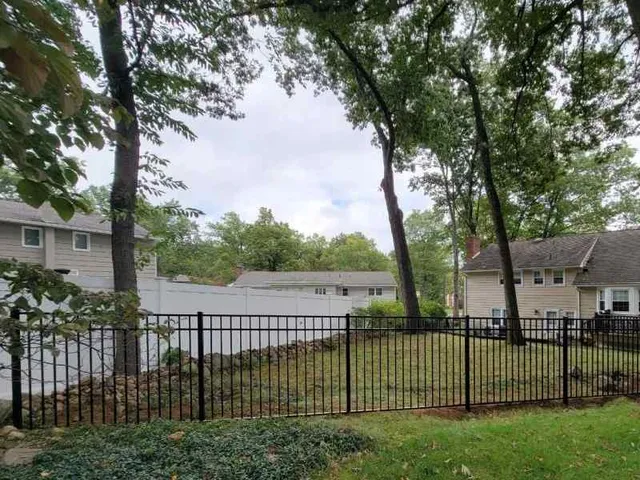
Aluminum ornamental
Strong, no horizontal footholds on the outside face, picket spacing that can be specified for small breeds, and self-closing gate hardware. It keeps sightlines open, which matters if you want to see the dog from the house.
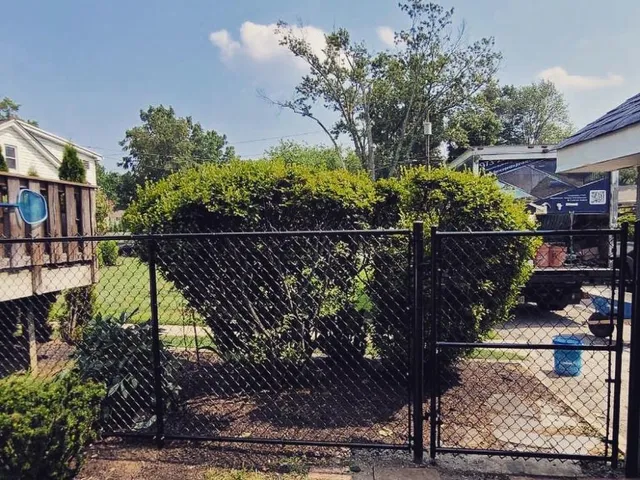
Chain link
The workhorse for dog runs and full-yard containment. Vinyl-coated in black or green it disappears visually far more than people expect, and it is the most economical way to enclose a large yard properly.
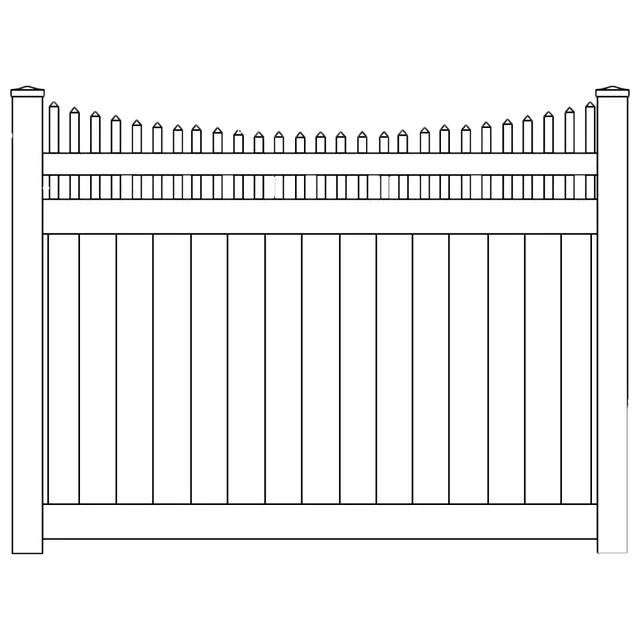
Vinyl or wood privacy
Solid panels contain the dog and stop the barking trigger at the same time — a dog that cannot see the sidewalk reacts to it far less. The right answer when containment and privacy are the same problem.
From assessment to a yard that holds
Four steps, permit and utility markout included, most residential runs built in one to three days on site.
Free on-site assessment
We ask about the dog before we talk about the fence — size, breed, whether it jumps, digs or tests the line — then walk the yard and hand you an itemized written estimate.
Height, spacing and gate spec
We size the height to the animal, specify picket spacing for the smallest dog using the yard, and choose gate hardware that closes and latches on its own.
Permit and markout
We confirm the ordinance for your address, help you prepare the zoning permit application, and have underground utilities marked. If there is invisible-fence wire in the yard, tell us — it is shallow and 811 will not mark it.
Installation
Posts set in concrete, the run closed to grade so nothing gets underneath, gates hung and adjusted. We walk the finished line with you looking for the gaps a dog would find.
What you get when Fence Pro by Bruno builds your dog fence
Closed at the bottom, not just tall
Most dogs leave underneath rather than over. We detail the base of the run — tight to grade, kickboard or buried mesh — instead of assuming height solves it.
Gates that latch themselves
The most common containment failure in any yard is a gate somebody did not push all the way. Self-closing hinges and self-latching hardware remove that from the equation.
Sized to your dog, not to a catalogue
A beagle, a husky and a great dane need three different fences. We ask what the animal actually does before quoting a height.
Pool in the yard? Two rules at once
A dog fence around a property with a pool still has to satisfy the pool barrier code. We build one enclosure that meets both rather than two that fight each other.
Permits and local height limits
Rear-yard height caps, dog-run allowances and setback rules differ town to town across northern New Jersey. We verify yours by address before quoting.
200+ five-star Google reviews
Family-owned, licensed and insured, with our own crew on every job — never subcontracted.
"Our dog had gotten out twice under the old fence. They asked about her before they even looked at the yard, then built the run tight to the ground along the whole back line and put self-closing hinges on both gates. She has not found a way out since."
Dog fence installation across northern New Jersey
We install pet containment fencing in every county below. Each county page covers the towns it serves and the local height, setback and dog-run rules that apply there.
0% interest financing available
Enclosing a full yard properly costs less than one emergency vet visit after an escape. Spread it over time at zero extra cost.
See financing options- 0% interest for qualified buyers
- Quick approval through our financing partner
- Pay over 12, 24 or 36 months
- No prepayment penalty if you pay off early
Dog fence questions, answered
Height by dog, digging, materials, invisible fences, dog runs, pool code and permits.
How tall does a fence need to be to keep a dog in?
How do I stop my dog digging under the fence?
What is the best fence for dogs?
Do you install invisible or electric dog fences?
Will a chain link fence hold a dog?
Can I build a dog run in my back yard?
My yard has a pool. Does the dog fence need to meet pool code?
Do I need a permit for a dog fence?
Ready for a yard that actually holds?
Free written itemized estimate. We ask about the dog first, check your town's rules, help you through the permit application and build the base properly.
Available Monday – Saturday, 8am – 8pm
Other jobs in the same yard
Pool on the property? The barrier has its own rules — see pool fencing. Deer in the garden? See deer fencing. Barking at the sidewalk is usually a sightline problem — see privacy fencing. Further reading: dog fence options and pet fence FAQs.
See all residential fencing →